Tuesday, June 8, 2010

Transportation & Logistics - Understanding When to Use Dimensional Weight Vs The Class System


The concept of Domestic Heavyweight shipping is far from being a "no brainer" in today's Supply Chain. A customer really needs to be on their P's and Q's to maximize their business when shipping via the ground. Other than price there are several key factors that must be considered to get the most out of your carriers- transit time, region expertise, to name a couple. Something that I had a particularly difficult time getting used to when I started working in the Freight industry was the concept of Dimensional Weight vs. the Class system for Motor Carriers.

Freight Forwarders use dimensional weight vs. actual weight; Motor carriers use the Classification systems to determine liability, costs of shipment, susceptibility to damage, and value. In laymen terms, the class system rewards a shipper whose shipment is dense with "0" or little value. So a customer shipping 500 pounds of screws would get more benefits of a good rate than a customer shipping 500 lbs. of feathers.

A few years back, the thought process was when shipping LTL type shipments to always use a Motor Carrier such as Conway or UPS Freight because you are going to get better rates and service. But times have changed in that Freight Forwarders have become more competitive in certain situations, and more often than not they will offer a faster transit time. Forwarders use dimensional weight to help them assess the weight of shipments. If your shipment is destined to travel on the ground with a Forwarder they will be using a DIM FACTOR of 250; shipments traveling in the air within the United States would be using a DIM FACTOR of 194; and international would be D.F. 166.

Let's take an example to show how dimensional weight is assessed vs. actual weight on a ground shipment:

Customer is shipping a pallet of computers headed to Denver, Colorado. The pallet dims are 48x50x50 with a weight of 300 pounds. After multiplying the pallet dimensions together and dividing by 250 your dimensional weight would be 480 lbs. So the carrier would use 480 lbs. to determine the rate. On the contrary, let's take the same product with the dims of 30x30x30 with a weight of 300 lbs... Using the same DIM FACTOR of 250 you now get the dimensional weight of 108 lbs. so in this case you would take the actual weight of 300 lbs.

What I have used as a general rule to understand the best time to use a Freight Forwarder vs. a Motor Carrier to ship out freight are:

  • 1) When time is of the essence
  • 2) If you are shipping via a motor carrier and your Class is at a 92.5 or above there's a good chance the F.F. will be more cost effective.
  • 3) If a shipment is high importance and damage is NOT an option- less handling.
  • 4) If there other variables such as "blind shipments" and "COD's" involved.
  • 5) If you have been experiencing theft or vandalism.
In conclusion, there are many benefits in using both a Freight Forwarder and a LTL carrier but the real key is for you as the shipper to fully understand the capabilities that they offer. Be smart, research and understand the benefits of your carrier and you can take full advantage of each of their resources.

www.made-from-india.com offers solutions that help companies to improve bottom-line operational efficiency and meet new performance objectives. The exclusive database covers information about Logistic & Transport services in India, Logistic & Transportation Products in India, exporters of Logistic & Transportation Accessories, Logistic & Transportation products importer, Logistic & Transportation supplier, Logistic & Transportation manufacturers, & Wholesalers, logistics services in India, and customized global transportation.

EJ White is a 15 year veteran in the area of Supply Chain and Logistics. EJ has worked for companies such as Fedex Services, Yellow Transportation and Aeronet Worldwide. His area of expertise is Supply Chain solutions and he believes in taking a consultative approach to working with his clients. EJ is currently serving as Vice President of Sales and Service with a fast growing Freight Forwarder based out of San Francisco, Ca. EASCO has proven to be a company who offers their clients solutions to maximize their efficiency and achieve the utmost cost reduction possible.

Thursday, May 27, 2010

Reducing Costs in Freight Transportation and Logistics While Improving Customer Service Quality


The process of managing stock, warehouse inventory, and freight transportation is at the heart of logistics. Logistics is the management and coordination of moving inventory from it's origination to its ultimate destination. The goal of a logistics team is to find a way to do this process in the most streamlined, cost efficient method possible.

When a product is ready for use, the clock starts to count down how long it will take to complete the cycle from completing the manufacturing of a product to the consumption of that product. The longer it takes to get the item into the hands of the consumer, the more money a company loses. So how does one streamline this process? By implementing a logistics plan of action, a company can do just that. Larger manufacturers will hire a logistics team that is responsible for the routing of goods from the company, to the freight transportation company, and finally to the end client. They will have a database system to track all inventory. They will monitor inventory levels to make sure that a backlog of supply occurs. The cost associated with storing inventory in a warehouse is often much greater than the expense of shipping products. For this reason, it is very important to carefully control how much stock is stored.

Another responsibility of logistics is to find the most cost-effective means of transportation. Obtaining freight rate quotes and striving to keep these rates as low as possible is a key factor to a successful logistics operation. When the trucking industry was deregulated, it sparked a new wave of competition and lower costs. This combined with improved technology to track and communicate shipments; freight transportation management became a little easier. Being able to follow and trace the cargo more efficiently has reduced the communication errors from supply chain to the wholesalers and retailers.

An additional responsibility of transportation and logistic specialist is to account for accurate transportation times. It is vital for companies to be able to rely and trust that their shipments will arrive in a timely manner. Being well organized accounts for much of this success, but the ability to transport the shipments quickly is also important. Because the country's infrastructure has improved with better maintained highways and interstates, transportation times have decreased. Freight transportation is more reliable now because companies can more accurately predict when a shipment will arrive. Some trucking companies will even guarantee the precise day and hour that a delivery will be made. This is very important because customer satisfaction is often based around on-time deliveries and accurate accounting of merchandise. This has also helped to reduce the cost of shipping freight, since trucking companies now have reliable, more direct routes to utilize. It indirectly affects cost because better roads create less wear and tear on shipping vehicles.

www.made-from-india.com offers solutions that help companies to improve bottom-line operational efficiency and meet new performance objectives. The exclusive database covers information about Logistic & Transport services in India, Logistic & Transportation Products in India, exporters of Logistic & Transportation Accessories, Logistic & Transportation products importer, Logistic & Transportation supplier, Logistic & Transportation manufacturers, & Wholesalers, logistics services in India, and customized global transportation.

If a logistic team only concentrates on reducing freight cost, they could potentially lower customer service quality. Therefore, the goal of a logistics manager, or third party administrator, is to find a balance between cost and customer satisfaction. They must also be able to provide accurate tracking information, correctly estimate shipping cost, and be able to calculate delivery dates and times. By being organized, keeping cost low for the clients, and by making on time deliveries, freight management can help control the overall customer satisfaction of their clients.

Saturday, May 15, 2010

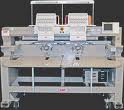
The Secret Behind the Pfaff Embroidery Machine


It is comforting to hear that a brand existed for a long period of time now. The Pfaff has proved itself and is still proving its consistency in providing familiarity, security and reliable quality. This brand goes with change and endeavor to bring products that the costumers' want. The Pfaff embroidery machine product line is without a doubt one of the best product collections in the world of sewing machineries. But, what makes them click?

www.made-from-india.com has most genuine trade directory of Machine manufacturers, exporters & Suppliers in India. The most prominent amongst them are information on latest Indian Machinery manufacturers, Suppliers of Indian Machinery & plant sellers, Tools & Machine wholesalers and distributors, tube winding machinery, Pharmaceutical Machinary, fireworks tube machinery, waste paper handling machinery, textile machinery spares, labeling machine, finishing machinery, electric generation machine, miscellaneous plants & machinery, and plastic processing machines suppliers etc.

Responds to People's Need

Unlike any other brands, this brand once again proved to hobbyists that they are revolutionary. Due to the customer's demand, its product changes as technology improves. With over 150 years of experience, this company develops and manufactures products that only satisfy costumer satisfaction. It brings out your creativity and fantasy through your design project. As a pro-consumer company, it prioritizes safety, convenient and comfort all in one equipment.

Offers Unlimited Creative Possibilities

Most of the quality sewing machinery come from this highly recognized brand. And one of the most expensive models in the market today is its Creative 2170. However, its quality features always outweigh its cost. In the end, the consumers are still liking and recommending it despite the high cost of the model. Being a user friendly machine, you can easily release your creativity. The limit of the possibilities is endless!

Superior Performance with Easy to Use Feature

In the past, embroidered designs are traced and redrawn, relatively time consuming and energy wasting. With these modern machinery, you do not need to go back to the old days of designing, redrawing, and sewing. The simplicity is so staggering that it takes every moment of your embroidering experience into the next level. The products performance is superb and their precision and speed are of top notch. The bottom line is you get both quality and quantity.

Transportation & Logistics - 7 Benefits of a 3PL Vs Traditional Freight Carriers


The day and age of Freight Shipping has seen a drastic change over the last 15 years. There was once a time wherein a Traditional Freight Carrier would dominate the Heavyweight shipping market with it's large fleet of vehicles, brand name recognition, and it's so-called ability to service their customers total shipping needs.

Much like the deregulation of the Telecommunication Industry in 1996, when smaller companies were finally allowed to take part in the booming market of telecommunications, the freight industry witnessed a resurgence, wherein smaller Regional carriers began to understand that there was a market for them. By specializing in smaller sections of their local areas, these companies began to develop a niche. The larger carriers had a choice to make, whether or not they wanted to compete, or concede these lanes, and they elected the ladder. Although the Freight Industry didn't have any "mandates" on customers having to use certain carriers, the big guys seemed to corner the market on virtually all heavyweight shipping needs, mainly because of their size and notoriety.

Fast forward to 2010, and yet another entity has developed, and taken the Transportation Industry by storm. The concept of Third Party Logistics has swept through the shipping industry and transformed the way companies do business.

3PL's came along and decided, to not just focus on a customers small parcel business, or heavyweight freight business, but to take a look at their entire supply chain. So they came up with the idea of going to the small parcel industry, the large traditional carriers, the regional carriers, and the freight forwarding community to negotiate rates, to go out and offer ALL services to a client base. To say the idea worked would be an understatement, the 3PL market today is in the area of $110 billion dollars.

www.made-from-india.com offers solutions that help companies to improve bottom-line operational efficiency and meet new performance objectives. The exclusive database covers information about Logistic & Transport services in India, Logistic & Transportation Products in India, exporters of Logistic & Transportation Accessories, Logistic & Transportation products importer, Logistic & Transportation supplier, Logistic & Transportation manufacturers, & Wholesalers, logistics services in India, and customized global transportation.

Below are the top 7 features and benefits of using a Third Party Logistics company over a Traditional Carrier:

1) Flexibility- Having the ability to choose from multiple carriers who specialize in certain regions of the USA, benefit customers in that in many cases, the traditional carrier may not have a solid distribution process to a certain destination, thus being able to pick from multiple resources, allows the customer to plan more strategically to enhance their Supply Chain. TC"s are very predictable, long haul or short haul shipping, is what they do.

2) Improved Transit Times- The ability to better one's transit times means the faster they get their product to market, thus speeding up the time they are paid from their customers. Or the faster they can bring materials to their facility for production, the faster they can get their product out to market. Just in Time Management, also begins to play a part in a Supply Chain, which leads to customers being able to keep less inventory, and build on demand for better efficiency. TC's can have great transit times in some areas, but be slow in other areas-typically they give you very little options to improve the transit time.

3) One Stop Shopping- The idea of being able to go to a single source and having all the resources that is needed is huge. The Y2K age has brought about the need for speed. Shippers are constantly searching for more efficient ways to get their job done. Better technology, more resources, shorter lead times are a few of the reasons that shippers have turned to 3PL's. The ability to go to an online site, have competitive rates in place from a myriad of carriers, and be able to track and trace those shipments, have taken the place of the 800 lb. shipping gorilla. As mentioned already TC's are very vanilla, and you get what you get.

4) Versatility- 3PL's allow for small, to medium size companies, the ability to align resources with business objectives. By using a 3PL, the small guys can make themselves seem larger in the market place. TC's align themselves with the larger Fortune 500 companies, and service the smaller companies as a means to an end.

5) Total Supply Chain Management- A company has the ability to control costs and efficiency throughout their whole supply chain with a 3PL. A traditional carrier allows specific lane costs cutting, but doesn't look at the customer's Supply Chain as a whole.

6) Convenience- The ability to deal with 1 company for multiple services far outweighs having to deal with multiple companies for single service.Also, your accounting department will love you. as using multiple TC's can cause much confusion in the accounting department.

7) Partners- If you can find a 3PL that is looking out for your best interest, they can become a partner of sorts. A good 3PL will be constantly looking out for their customers best interest, throughout the life of the relationship. They have no biases toward any one carrier or methods that you are used to get the job done. Traditional Carriers are heavily biased and will only help you, as long as you are doing business with them.

Wednesday, March 3, 2010

Features of Great Cargo Transport Services

Industrialization started it all, globalization completed it. These days, there is no end to the extent cargo can travel. With the entire world shrinking to a tiny market, no one can predict when a requirement will pop up to ship an important consignment to the remotest and most far flung area in the world. Therefore, it is only natural that logistics experts say that the world has become a place without borders. Transport across all sorts of terrain is not only possible but also widely available. Without such facilities, business in the modern world would be seriously crippled.

To rise up to the challenge, it must be said in the favor of reputed cargo shipping agencies that they are leaving no stone unturned. They make use of deep sea container terminals, if necessary. They use equipment like forklifts, container handlers and climate controlled storage facilities. As is obvious, the quality and expertise of the world's greatest cargo transport service is always being revised and better alternatives are being unearthed time and again.

Whether you are an individual who is shifting base or a company that is expanding or moving offices, the need for quality cargo transport services cannot be minimized. As customers, clients and businesses demand timely and accurate delivery of cargo, transport services have no choice but to deliver. To this end, they need to do much more than just take shipment and provide delivery.

Reputed cargo transport services offer many facilities like:

* End to end global shipping of cargo
* Monitoring and transporting of materials
* Proper management of cargo from the place of origin to the destination
* Intermodal transportation to ensure that the cargo is shipped in the easiest and quickest manner possible. This is an important part of successful supply chain management and it also contributes to shrinking the overall cost of the project
* Proper storage facilities
* Supervision of unloading and loading
* Excellent freight maintenance
* Reduced cost through route optimization and efficient operation
* Accurate and complete documentation services
* Friendly staff that can help clients with any query and concern
* World class supervision facilities including the safe keeping of hazardous, sensitive cargo
* Post shipping services like job-site unloading and checking

Effective supply chain management is an important aspect of any cargo transport service. Reputed companies make it a point to supervise every aspect of the process. Only such a cargo transport service can provide a seamless solution where international production lines are able to function smoothly and seamlessly.

Tuesday, February 23, 2010

Transportation & Logistics - 7 Proven Strategies to a 6 Figure Freight Sales Income

If I had written this article 20 years ago I probably would have been banned from this site for making false claims. I mean the Freight Industry is notorious for being one of the most uninteresting, unappealing markets to get involved in for a Sales Person. Think about it, your dealing with dirty, smelly, boring boxes and simply transporting them from one place to another. There are no cool "buzz" terms, like in high tech. There's no schmoozing, like in the Financial Industry. There are no true "huge" deals that you are going to walk into and make millions like Investing. Working in the Freight Industry truly tests a persons total sales repertoire, their intestinal fortitude, and their ability to work with any/all personality types. Once I realized this, and started devoting my time to becoming a student of the business I became enlightened by the vast opportunties that present themselves in the Industry.

What has changed in 20 years that has made the Freight Industry so profitable you might ask? Are the products that are being hauled more expensive, therefore allowing more of a profit? No! Are customers now willing to pay more money to move their products? No! Are carriers paying their Sales Representatives more money than 20 years ago? Not a significant amount more! One word answers those questions- options. The freight industry has gone through a major upheavel with the birth of the Third Party Logistic Industry. A Sales Representative working for a solid Third Party Logistics company can literally walk into a potential client and offer them 100's of options and viable choices to make their jobs easier and more efficient. If the sales rep takes it a step further, and develops pride in his trade, he can become a value-added resource to his clients. When this happens, income can soar in direct proportion with his worth to his customers.

The following are 7 strategies for maximum success in the Freight Sales industry:

Preparation

- Always, I mean always, devote time to learning your company's advantages, but more importantly, understand some basics about your potential customers industry. Customers don't have the time, nor do they enjoy having to explain their business to a sales rep- that's why we have the internet.

Versatility

- You need to be able to talk with all sorts of people. Whether it be the Warehouse person, the secretary, accounting, or a C-Level type.Having the ability to adapt at a moments notice is huge, in any Industry, but it is very important in Freight Sales. Along those same lines are having strong People Skills. Now, please note, this doesn't mean making false rapport building attempts when you walk into your contacts office. Nor does it mean being a "kiss" butt. It should be your goal to be REAL and TRUE to your clients, let them get to know YOU. If YOU is not good enough, then you have other issues that need to be dealt with (we'll discuss that later).

Integrity

- Without a doubt, this could be the TOP attribute that you will need to assist you in any Sales Industry. If you don't know what this word means, STOP reading now and get a dictionary. Can you become successful without having "Integrity"? Sure. But please believe that somewhere down the road without it, karma is sure to catch up to you. Integrity is the glue that holds together a person through those tough times in Sales. If you are doing the right thing for your customer in your heart, and can look yourself in the mirror the next day, then you should be proud, and you will be rewarded-trust me on this.

Accountability

- The Webster dictionary defines this word as, 'an obligation or willingness to accept responsibility or to account for one's actions, public officials lacking accountability.' Customers consider this one of, if not the TOP attribute that they want from a Sales Person. Remember, they don't start asking for you until something goes wrong, and this is when you get a chance to earn your money and make a statement in the eyes of the customer. Free advice. When something happens, be the person to tell your client- although they might be upset they'll respect you forever. This characteristic also incorporates the crucial ability to be able to follow up with your client when you say you will.

Self-Development

- Whether you get invovled with Freight Sales, High Tech Sales, or are a Contractor, I believe that Personal Development is without a doubt, one of the most important investments that you can make in yourself. Whether it be reading a business book, listening to motivational cd's, or meditation you need to devote time to yourself so that you can bring more to the table for your clients- they depend on you. I devote time everyday to read 15 pages from a personal development book

Have Fun

- Always take the time to enjoy what you are doing. Find humor in situations, share that with your customer, of course when appropriate. Smile, it's truly contagious, and you will separate yourself from all the grouchy Sales Reps out there who are beat down by life.

The Company

- Look for a company that is going to let you be you. As I had mentioned earlier, 3PL's are a great way to make alot of money in today's Freight world. But like anything else, it's going to depend on who you choose and what they have to offer. Consult with someone who is familiar with the Industry and who can give you a honest, nonbiased opinion. Companies that are growing, and open to expansion are always interesting to check into. Feel free to use the guidelines of this article to separate your top choices as well. I mean, companies need to have Integrity, Accountability, and many of the attributes that you have just learned. Make them prove themselves to you, and take pride in the company that you represent.

Earl White is a business owner, or as he likes to say, a LogistixPreneur. He has been in Sales for over 15 years and works with many sales reps to help them gain better footing when it comes to the elusive practice of working with clients. He enjoys being able to pass on many of the skills he has learned from Top Salesman in the Industry.

Monday, February 22, 2010

Transportation & Logistics - 10 Things Shippers Want to Look For When Selecting a Freight Carrier

The current economy has provided the Transportation Industry with an influx of new companies that are looking to try to break into Shipping Freight. These companies are smart, because they are not looking to compete with the Big Boys, like the Fedex, UPS, and Conway's of the world, but they are looking to fulfill a niche market.

They hire a cousin to be the driver, and a friend to work the books. They acquire all necessary licenses and pay the fees that need to be paid and their in business. From this point on many of them proceed to the market place to offer, not value, but cheap rates, thus dropping the Industry market value down considerably. So with this in mind, a typical shipper probably has, at the least, 15 knocks on their door from potential new shipping vendors who say they want an opportunity to bid on their Freight.

Most customers at this point take the rate sheet, or at the least, take the sales reps card to perhaps give them a quote opportunity. The issue that faces a warehouse Manager is that every sales rep that enters the door is talking about 1 thing, and one thing only- cheap rates. It's not a wonder why Warehouse Manager's are at their wits end with Sales Calls. This article consists of some general guidelines that a shipper should consider when looking to hire a freight carrier. This list is compiled from consulting with many clients in the industry, as well as several Operation Managers.

10 Areas That a Shipper Wants To Examine Prior To Hiring a Freight Company:

1) Service Commitment- Make sure to ask questions directly concerning the destinations that you ship. Often times carriers will list transit times and destinations that they might not serve directly, but may have agents working for them their. Don't get me wrong, there's nothing wrong with an Agent relationship, but this is something that you want to make sure you ask the carrier.

2) Accountability- If a carrier promises you something make sure you hold them to it...Freight is not an exact science, so many things can come into play with regards to shipping- weather, load factor, mechanical issues, the list goes on and on... Make sure carriers take ownership of their promises and guarantees.

3) Price- I list this 3rd on the list because, believe it or not, price is not as big as people want to play it out to be. You see, if your product doesn't make it's destination safely and in good transit time, it won't matter if you received a dirt cheap rate because you will have a very unhappy customer. At times customers can live with a long transit time, but those times are, few and far between, in today's market.

4) Follow Up- If the Carrier doesn't get back to you in a timely fashion, or forgets altogether, then you definitely want to reevaluate your choice of vendors. Whether it be your sales rep, or your customer service agent, poor follow up runs through the company typically.

5) Operations- Grumpy operations personnel make for poor service all around. If you ever feel as if "you are bothering your operations representatives" then you definitely need a new company. In freight you might be dealing with employees who have been in the business for over 30 years, and really don't like their jobs- they often take it out on the customer. Don't fall into this trap!

6) Technology- We are in Y2K!!! If a company is not able to provide you with online capabilities and up to date information on your shipments then this might be a sign to look for another company. Please understand, there are many shippers that prefer to have a live person than use online technology, and that's fine, but the Freight carrier needs to be able to back that up with online technology for quick reports and a more efficient Distribution system.

7) Customer Service- We've all had those bad service experiences going out to dinner with our spouse, a rude customer service operator, so I'm sure you can relate to this topic. Never settle for rudeness because of cheap rates, you'll end up regretting it in the long run-guaranteed.

8) Ease of Engagement- This speaks for itself, because it should always be easy to get a hold of your Sales Person or the Operations Team. Companies that are good in this category do things like, answer the phone within 3 rings; follow up with emails/phone calls the same day; take a proactive approach to service rather than reactive.

9) Recoverability- I coined this term a few years back. When something bad happens, the good companies get right on it and maintain solid communications with the Shipper and all necessary parties. We all know that things happen, but it's how Carriers respond and recover that make them GREAT.Often times mishaps are what help solidify a Customer-Carrier relationship- ironic.

10) Gut- More important than all of the other topics combined is to make sure you use your gut instinct. If you don't feel right about the carrier, or if you can't seem to find anything good about them other than price then you might need to take a mental note and look deep at their company because the GUT is usually right on the money.